


Outboard fuel consumption and marine engine consumption: monitor everything in real time with NaviFlow
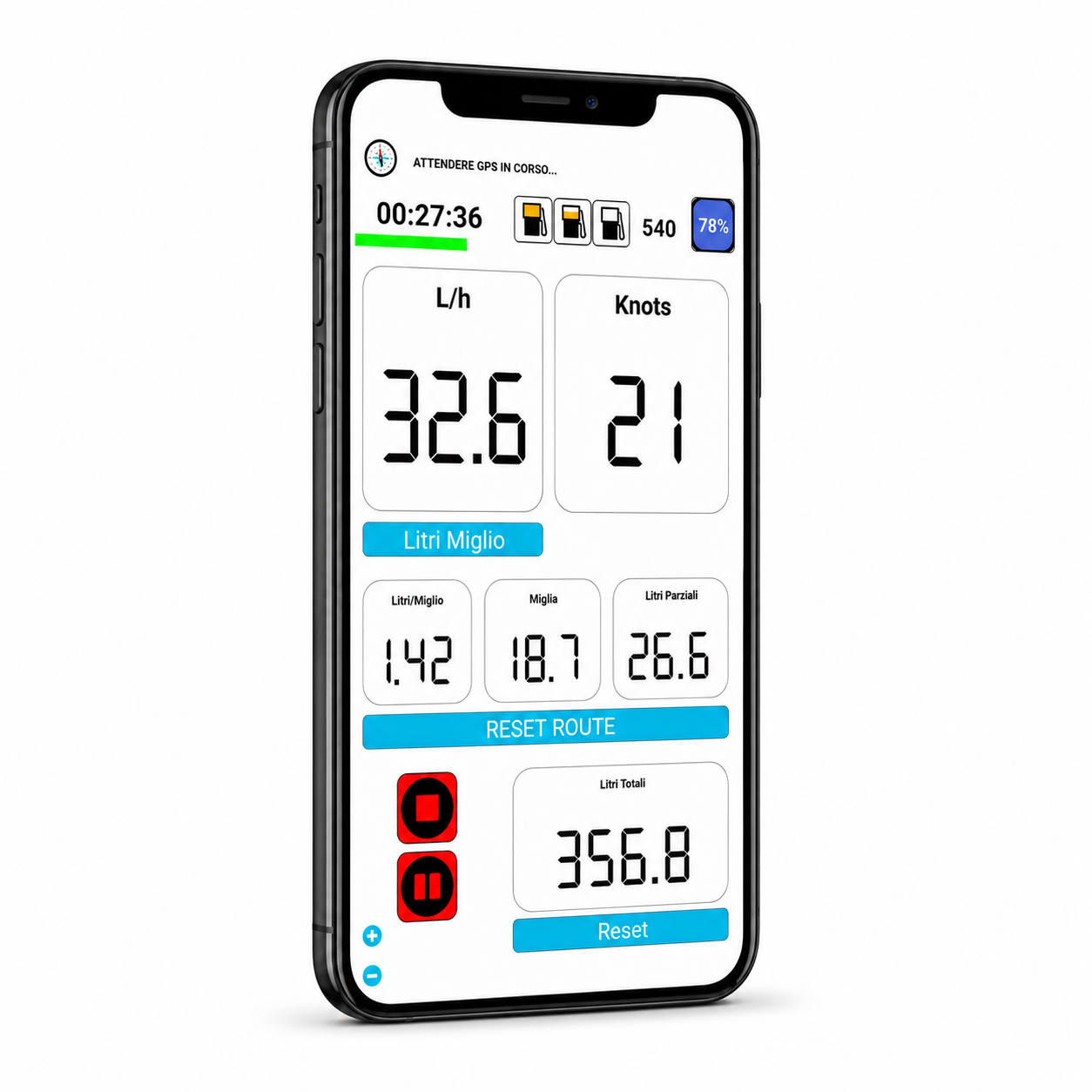
No more rough calculations, unreliable formulas and approximate fuel estimates. For years, boat owners have tried to understand outboard fuel consumption and marine engine fuel use by relying on tables, forum discussions and manual tests, often with inaccurate results. With NaviFlow, you can finally know your boat’s real fuel consumption in real time, viewing the data on your chartplotter or directly on your smartphone. Having control over liters per hour, liters per nautical mile, historical fuel data and fuel costs means boating with more awareness, more safety and less waste.
Knowing how much your boat really consumes is not just a matter of curiosity. It helps you understand whether you are navigating with the right trim, whether the tabs are helping or reducing efficiency, and whether the onboard weight distribution is really optimized. In practice, it helps turn technical data into concrete decisions, with an immediate advantage in fuel savings and navigation costs.
Whether you have a RIB, a motorboat, a petrol outboard, a sterndrive or a diesel engine, monitoring fuel consumption accurately allows you to identify the most efficient cruising speed and the ideal running attitude. This is where a system like NaviFlow makes the difference: it does not simply provide a number, it helps you understand how to truly improve your navigation efficiency.
What affects a boat’s fuel consumption
Every time we go boating, whether for pleasure or work, conditions are different, and each of them affects final fuel consumption. Wind, current, wave height, fuel load, water onboard, provisions, passengers and weight distribution are all factors that can significantly change the boat’s efficiency.
Added to these are technical variables such as trim angle, tab position, engine height, propeller type and cruising speed. Even small variations can have a noticeable effect on final fuel consumption. This means that the ideal setup from yesterday may no longer be the right one today, even with the same boat and the same engine.
That is why it is not enough to know a theoretical average or rely on a value measured only once. To truly optimize outboard fuel consumption or marine engine fuel use, you need a real-time value that shows you exactly what happens while you change trim and speed.
How to optimize the fuel consumption of my outboard or any marine engine
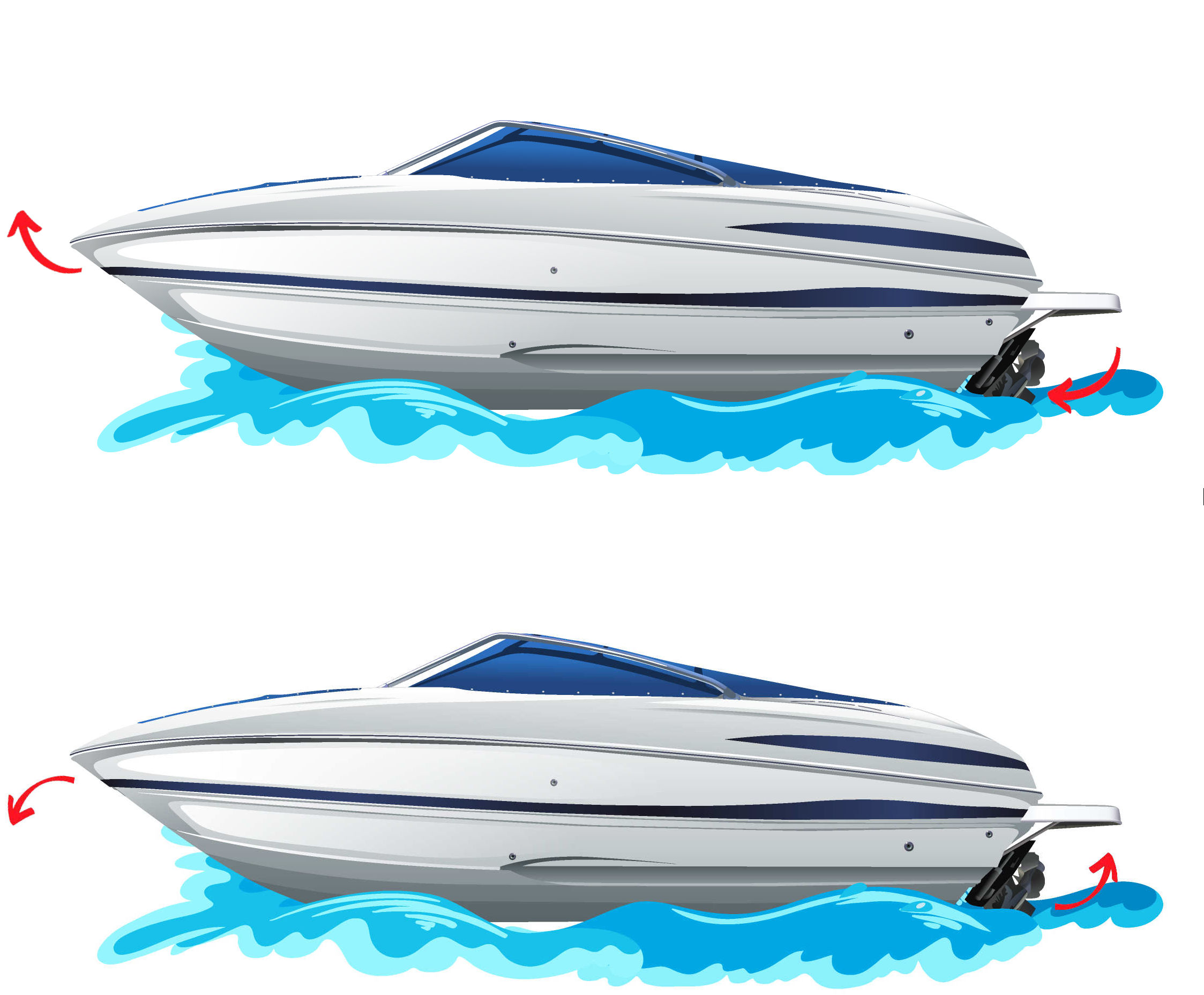
One of the main factors affecting marine engine fuel consumption is the boat’s running attitude. If the trim angle is too low, the hull has to push a larger volume of water to move forward, increasing fuel use. On the other hand, if the trim is too high, the engine thrust becomes less efficient and speed can drop even while fuel consumption stays high.
The same applies to trim tabs and weight distribution onboard. If the load is not positioned correctly or the adjustment is wrong, the boat may lose efficiency and consume more fuel than necessary. This often happens without the skipper noticing it immediately, because the driving feel does not always match the best possible efficiency.
The solution is to use a marine fuel economy meter that shows real fuel consumption while boating. With real-time fuel data, you can adjust trim, tabs, throttle and weight distribution until you find the best setup. This way, you no longer proceed by guesswork, but on the basis of concrete and immediate data.
The result is twofold: on the one hand, you improve the efficiency of the boat; on the other, you reduce fuel waste immediately. For people who boat often, this also means tangible savings over time.
What is a marine fuel economy meter
A marine fuel economy meter is an instrument that allows you to monitor your boat’s fuel consumption accurately, continuously and reliably. Unlike other systems that estimate fuel use based on engine RPM or indirect parameters, NaviFlow measures the actual flow of fuel and returns data that are much more useful during everyday boating.
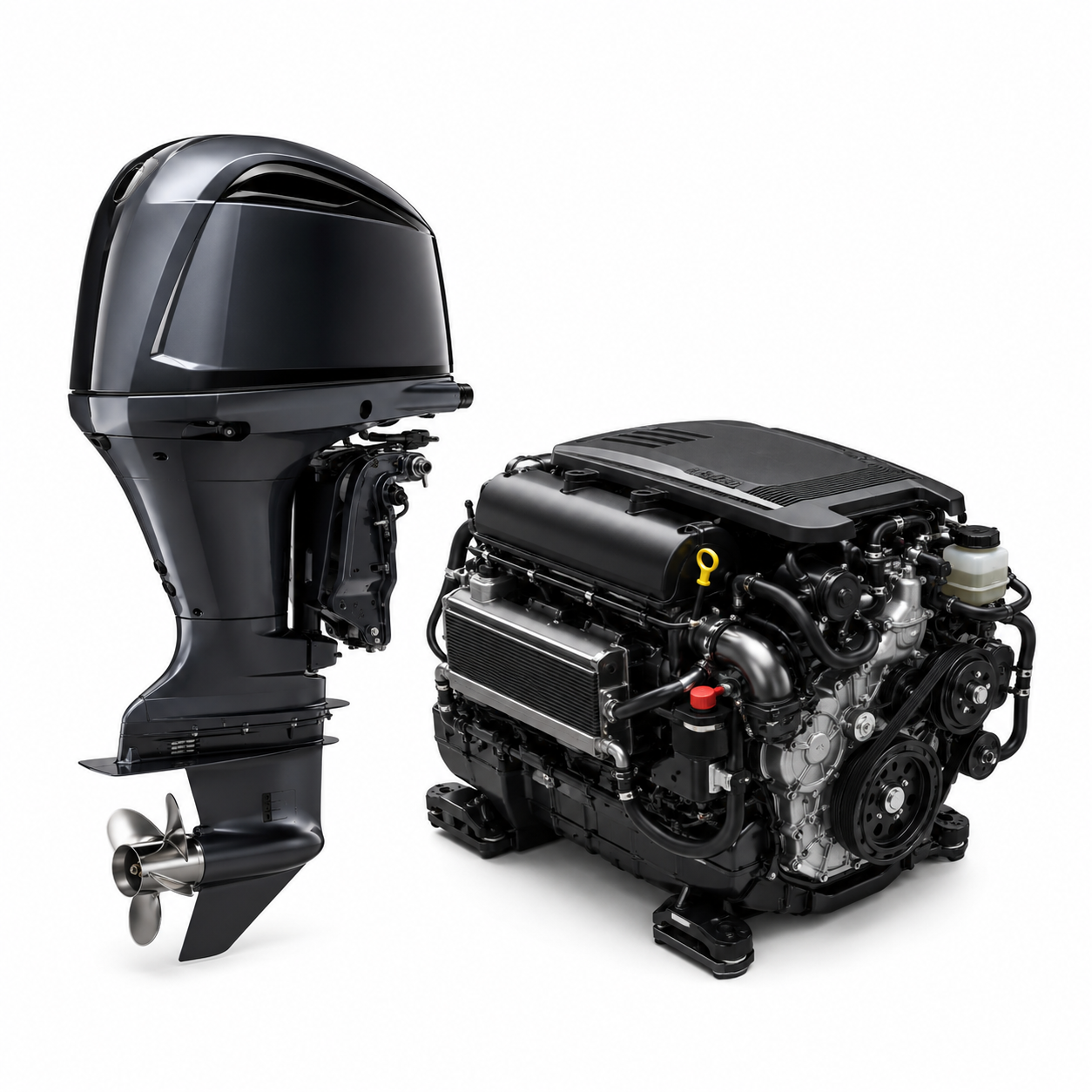
This means you can read how the engine behaves in relation to the boat’s real use. Whether you have a 2-stroke outboard, a 4-stroke outboard, a petrol engine, a diesel engine, a single-engine setup or twin engines, having real fuel consumption data changes the way you interpret performance and allows you to optimize your navigation immediately.
NaviFlow is suitable for many different installations and can be used on engines from well-known brands such as Volvo Penta, Mercruiser, Yanmar, Honda and many others. The advantage is not only technical but also practical: knowing exactly how much you are consuming while boating removes doubts and uncertainties and helps you understand right away whether you are running efficiently or not.
Which data really help improve cruising efficiency?
One of the most important values is undoubtedly liters per nautical mile, meaning how many liters of fuel are needed to travel one nautical mile. This value is essential because it directly connects fuel use to the distance covered and helps you understand not only how much fuel you are burning, but how efficiently you are actually navigating.
If, for example, fuel consumption is 2 liters per nautical mile, it means that you need 2 liters of fuel to cover one nautical mile. By changing speed, trim, tabs or onboard weight distribution, you can immediately verify whether this value improves or gets worse. This real-time reading is exactly what allows you to find the ideal cruising setup without relying on sensations or assumptions.
In addition to liters per nautical mile, liters per hour, speed, total fuel used during the trip, remaining fuel in the tank, trip history and fuel cost are also very useful values. Read together, all these data provide a much more complete picture of your navigation and help you understand precisely where you can intervene to save fuel.
What data does NaviFlow provide?
NaviFlow allows you to monitor many parameters that are truly useful for anyone who wants to optimize fuel consumption: liters per nautical mile, liters per hour, speed, fuel used, trip history, navigation costs, remaining fuel in the tank and fuel consumption memory over time. Having all this information available means being able to analyze every outing at sea with greater precision.
The system is suitable for 2-stroke or 4-stroke petrol outboards, single or twin petrol sterndrives and diesel sterndrives. In all these situations, monitoring fuel consumption makes it easier to identify the best setup and reduce wasted fuel.
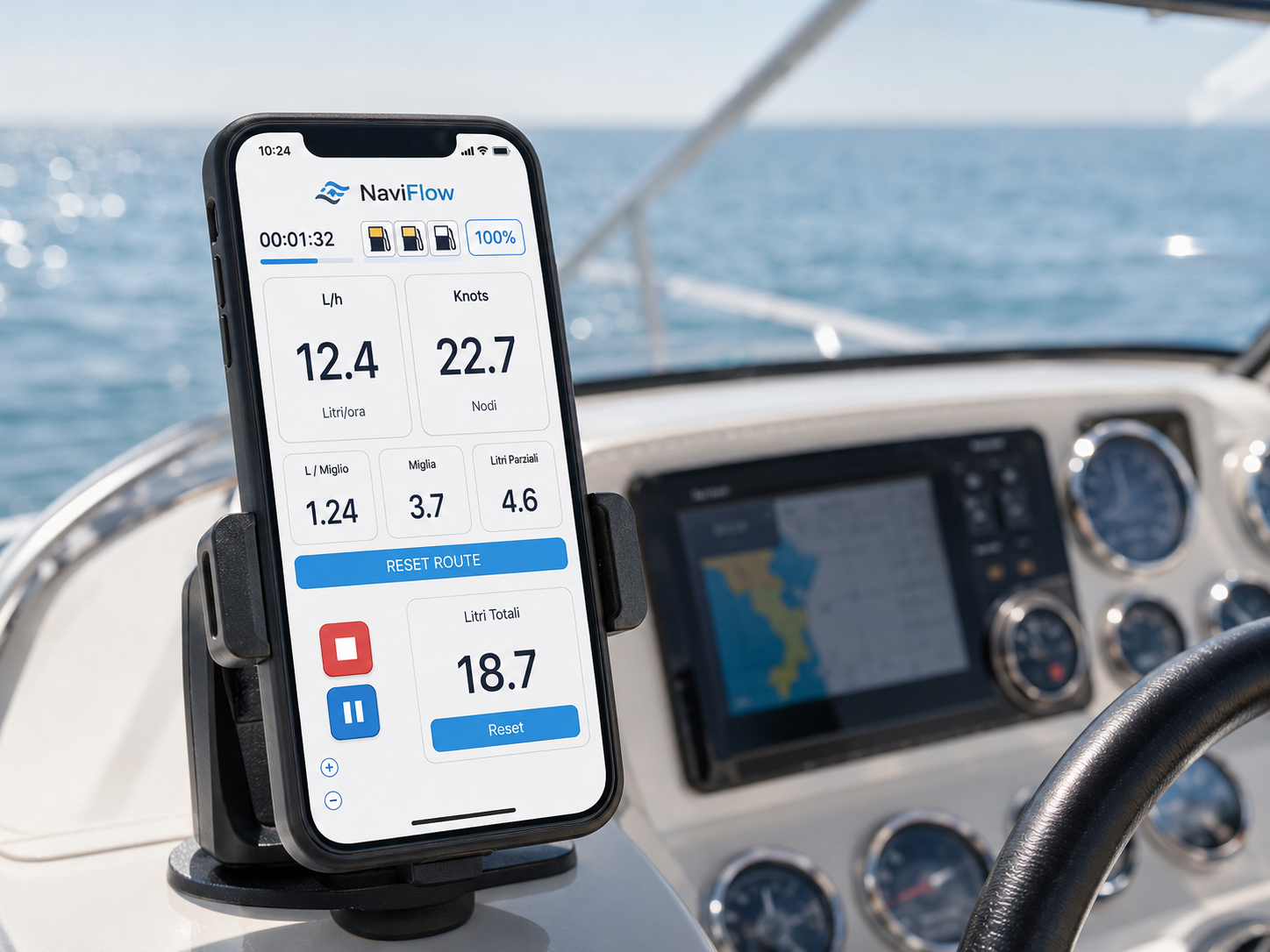
If you want to manage these data on your phone as well, you can learn more about the boating fuel consumption app, designed for iOS and Android.
How can I view all fuel consumption data?
You can view all data directly on your smartphone or connect NaviFlow to your NMEA 2000 network. This allows you to choose the most convenient way to read the information depending on your boat, your onboard instruments and your boating habits.
On smaller boats or RIBs, the smartphone can be an extremely practical and immediate solution. On larger boats, it can be very convenient to view fuel data directly on the chartplotter, alongside the rest of the navigation data. In both cases, the goal is always the same: to keep everything under control while boating.
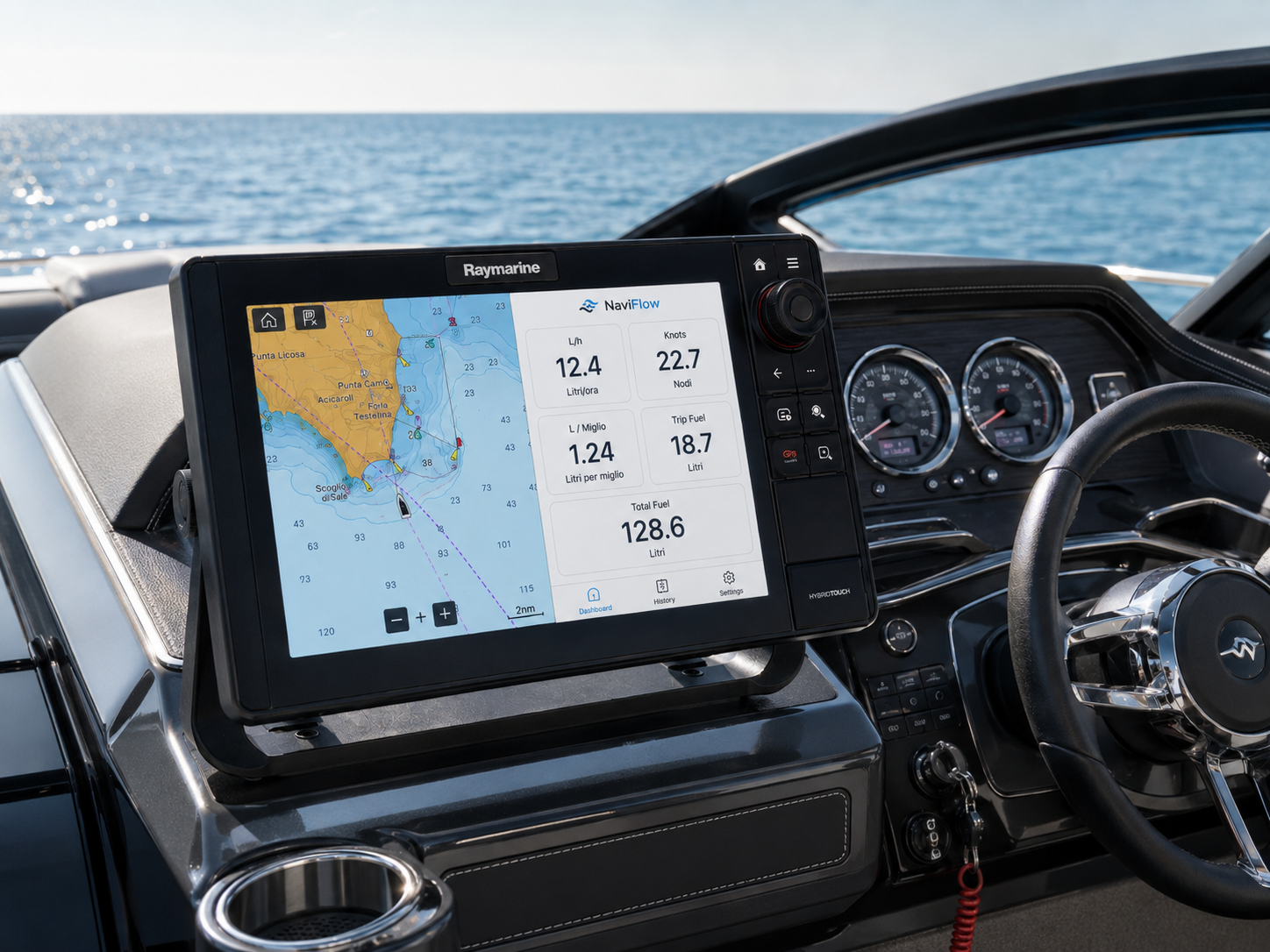
The NMEA protocol has been available for years on many chartplotters and marine GPS displays such as Garmin, Raymarine, Simrad, ONWA and Lowrance, as well as on several devices compatible with this standard. Having fuel consumption data directly on the onboard display helps integrate fuel monitoring with the rest of the navigation data, improving readability and ease of use, especially on larger boats.
In addition, having this information directly on the chartplotter can be particularly useful on boats longer than 10 meters, where reading it on a dedicated display may be more practical than using only the phone.
How much fuel does a motorboat use?
There is no single answer that works for every boat, because fuel consumption depends on many factors: engine type, power, weight, onboard load, sea conditions, setup, propeller, speed and driving style. That is why theoretical averages or values found online are often not enough to understand the real fuel consumption of your own boat.
The only truly useful way to know how much fuel a motorboat uses is to measure the real value while underway. Only then can you understand which setup makes you consume less, which speed is really convenient and which changes help you save fuel without compromising comfort or performance.
This becomes even more important when boating often in changing conditions or with different loads from one trip to another. In these situations, real-time fuel monitoring becomes a practical and concrete tool, not just a technical value.
Would you like to learn more?
Do you have doubts or questions about our marine fuel economy meter? Contact us: we will be happy to explain how our fuel monitoring system works and help you understand which setup is most suitable for your boat or RIB.
NaviFlow is designed for those who want to monitor fuel consumption in a simple but precise way, improve navigation efficiency and reduce fuel costs. Even small improvements in setup, once measured correctly, can make a real difference in total expenses.
In the video below you can see a real example showing the fuel consumption of a Mercruiser 4.3 MPI on a Mano Marine 22.50. It is a useful example to understand how fuel monitoring can help identify the best setup and accurately evaluate engine behavior during navigation.

NaviFlow, boating with passion!